Avoid the List-Driven Presentation

A key characteristic of top performers is the ability to focus on the most important issues. Watch the one-minute video to learn how to get right to the point, and avoid the “list-driven” presentation.

Speaking Notes, Not a Script

Your notes play an important role in your ability to speak in an intentional, yet authentic manner. Watch the video for the tip.

What's Behind You?

When I think about how my background has appeared in virtual meetings over the years, I immediately think about what didn’t go well. The potted plant that was in the wrong place, the bookshelf that was too close to my head, the messy desk that appeared front-and-center. What’s the secret to a professional background for video and virtual meetings? Watch the one-minute video for my tip.

Small Changes, Big Improvement

I recommend starting with a single, actionable change in your speaking and presentation style. Small steps lead to significant results. When people ask about how they can communicate at a strategic level, I recommend replacing the “list-driven” presentation with a presentation that focuses on key issues. To get started, apply these skills in a routine meeting or status update. Watch the video to learn more.

It's About Them, Not You

Looking for the perfect thing to say at your next holiday party, office gathering, or neighborhood event? The answer may lie in the questions you ask of others. Questions that lead to meaningful conversations include: “What’s something you (or your organization) has done this year that makes you proud?” “What trends are you seeing in your industry?” “What do you see ahead for your company/industry/profession in 2025?” Or my personal favorite…. “That’s interesting. Could you tell me more?”

How to Sit in a Meeting or Media Interview

How we sit in a meeting or media interview can influence how we’re perceived by others. If we clutch our hands or lean on our elbows as we speak, our words have less impact. With virtual meetings, it’s even more important to sit in a way that allows us to use our voice and body language effectively. Watch the video for details.

The Science Behind “Simpler is Better”

When it comes to business presentations, simple is better than complex.

I know WHAT works. I was curious about WHY.

I asked Dr.
Grace Chang, Ph.D. for insight. Grace has a PhD in cognitive neuroscience and leads learning research initiatives at EY.  She and I served together on the leadership team of the Duke Alumni Board of Directors.

Grace’s Response: It's true that simpler presentations that focus on key messages are more effective!
The process of whittling down the message benefits speakers because they have put in the cognitive effort (the brain work) to figure out what’s most important. When speakers have a clear message, they’re more confident.

Just as important is how this benefits the audience. Our brains can only focus on and process a limited amount of information at one time, i.e., we have a limited "cognitive load" that we can handle. When speakers present complex PowerPoint slides that are packed with too much content to an audience, they are not honoring our brain's natural limitations.

It's like stuffing a grocery bag with too many items. Your bag is likely to break, and even your most needed items will fall out. So, the risk of overstuffing your presentations is that even the most important points may not stick with your listeners. If you want your audience to understand and remember your key messages, less is more.

Speaking On Video

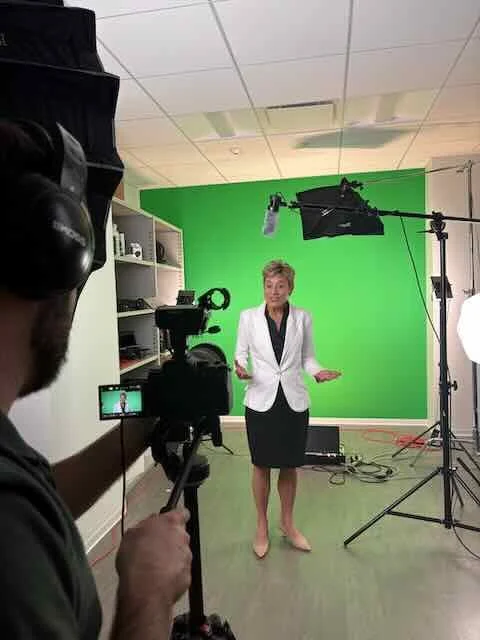
This summer, I’ve seen a uptick in requests to prepare leaders to speak on video. The specific ask has been to prepare leaders and professionals to record brief, compelling videos to post on social media. While the marketing team can handle the recording and posting, what’s needed is coaching for the speakers. You want to deliver your message in less than a minute, while speaking in a conversational and intentional manner.. Watch the video to learn more.